In this episode, I sit down with Mark Rampolla, co-founder of Ground Force Capital and the brand behind Zico Coconut Water, to unpack the inner and outer work of leadership. Mark shares how the stories we tell ourselves can quietly shape our decisions and sometimes hold us back. We talk about why self-reflection isn’t optional if you want to grow, and how leaders can evolve alongside their organizations.
We also get into the practical side of scaling: making smart operational shifts, building teams that truly complement each other, and adapting your leadership style as your company grows. One theme keeps coming up: feedback. Mark explains why embracing it (even when it’s uncomfortable) is one of the fastest ways to improve. Along the way, he opens up about his entrepreneurial journey and the lessons that shaped how he leads today, offering actionable insights for anyone navigating growth and building a thriving organization.
Episode Highlights & Time Stamps
2:16 The Inner Game of Leadership
7:40 Overcoming Growth Challenges
13:59 Building the Right Team
20:10 Self-Assessment for Leaders
25:43 Finding Your Zone of Genius
27:19 Wrapping Up Insights from Mark
Transcript
Transcript
[0:00]Write down the story you’re telling yourself about your organization. The Story You Tell YourselfThe Story You Tell Yourself
[0:05] It’s not good enough. It should be different. I need to do this. I don’t need to do that. Okay, great. Are you certain it’s true? And that ability to ask with real curiosity and also with a lot of self-love and laughter, like, you know what? Yeah, I can kind of see. Maybe I don’t. Do I have the right team around me? right do we have the right systems in place am i ready for this next stage of growth right one of the other things i encourage leaders to do is so few do this ask for feedback ask for i ask my team, i ask my ceos i ask boards that i’m on hey how could how am i showing up what could i do better how could I be even more powerful to you?
[0:58] Welcome to Growth Think Tank. This is the only place where you will get insight from the founders and the CEOs of the fastest growing privately held companies. I am the host. My name is Gene Hammett. I help leaders and their teams navigate the defining moments of their growth. Are you ready to grow? Today we’re going to talk about building the right team at the right growth stage of your company. If you have a team and you are feeling the heaviness, things just aren’t working as the way they used to, you’re having to work harder, you’re not getting the effectiveness and performance out of your team, it may be because you’re trying to operate from the same plan or operating system for leadership that you’ve always used, and maybe it worked in the past. It probably did to get you to 5 million, 10 million, or 20 million. But sometimes you have to re-align yourself and renew your operating system for leadership as you grow. Our special guest today is Mark Rampala. He is the co-founder of Ground Force Capital. They were on the Inc. 5000 list recently. And he’s also the founder of Zico Coconut Water.
The Inner Game of Leadership
[2:13] Amazing story about how he sold it to Coca-Cola. And as they ran it, it didn’t fit in their portfolio anymore. and he bought it back, but he’s had many exits around this, and Ground Force Capital is making investments in all kinds of companies to help them grow and scale, and it really is great to have Mark on the podcast. Some of the things that we talked about today that I think you’ll really enjoy were him talking about the inner game of leadership. Now, a lot of people don’t really understand that. They just want to focus on doing the work and getting things done and hitting the goals and crushing the sales. All that stuff is part of growth, but there’s an inner work component that if you’re not willing to be self-aware and really dig into it, then it’s probably going to catch up with you. And he talks about the importance of that inner work. He talks about self-awareness in a way that hopefully will get you unlocked. Give some examples of some of the companies he’s worked with and some of the things that he’s had to do. He talks about really identifying your zone of genius, which is different from your place of excellence of work. And certainly it’s very different from your competence and incompetent level of work. So he goes through that framework. But what I really wanted to highlight here for you today, if you want to build the right team.
[3:35] You’ve probably heard this phrase before, but what got you here won’t get you there. I’ve used it many times, a different podcast, and Mark used it. And I’m telling you again, reminding you that if you’re feeling like it’s not working because of the way it used to, realize that every stage of growth requires a different version of you, some different systems within your business, and sometimes even different people. So what got you here won’t get you there. Hi, my name is Gene Hammett. I am a founder coach, CEO coach. we work with companies that are in growth mode, helping them create.
[4:07] Team-driven companies. Team-driven companies are ones that are not founder-dependent. If you are working harder, you’re making all the decisions or most of the decisions in your business, you’re trying to control your way to growth, then you definitely want to lean into this. Our purpose is to help you become a better leader, but also to grow your company. And to do that, you have to create a team-driven company. And all that is unlocked inside of a training that we do absolutely free. Just go to training.coreelevation.com. You can sign up today for our next workshop on that. It’s about 90 minutes. What you’ll get inside of it is really priceless.
[4:49] But your time is valuable, I know. So if you’re curious about that, go check out training.coreelevation.com and see if it’s right for you. It’s absolutely free. Now, here’s our interview with Mark. Hey, Mark, how are you? I’m doing well, Gene. Thanks for having me. Oh, I’m excited to have the conversation, and we are going to really dive into this. You’ve got a background, and it’s really impressive with Zico Coconut Water, but today you’re the co-founder of Ground Force Capital. I’m going to let you give us a little bit more context around those accolades. Yeah, sure. So I had a little bit of a unique career, I think, starting off literally the dirt path as a Peace Corps volunteer in Central America. But then went back to business school and then had a corporate career for about seven years with a U.S. Multinational international paper and wound up moving to Latin America to run a number of businesses.
[5:44] And somewhere late in that journey, I realized, God, I don’t want to be a corporate guy my entire life. And so I’d never really thought much about entrepreneurship, but I decided I wanted to give it a go. And so I came up with the idea for Coconut Water. And this was 2004. Or the category didn’t exist back then. So I came up with this brand, Zico Coconut Water, quit my job, moved to New York.
[6:07] And over, you know, nine years, basically learned a thing or two about the beverage industry and in general building businesses. So I built that up over nine years and sold that to Coca-Cola at the end of 2013 and then became, you know, I sort of thought I was successful. We’ll get into that later, kind of feeling like like I had made it. But I, you know, still had a lot to learn, let’s say. And I wound up becoming a quite active angel investor and then decided I liked the investment side. So I started an investment firm originally called Power Plant Partners to focus on plant-based, but then we changed our name to be Groundforce. And so we’re a $600 million asset management firm, and we specialize in growth stage. So mainly consumer products and the businesses that serve consumer product businesses. And we specialize in sort of backing companies that are sort of 20 to 100 million in revenue that and dive in deep to help them get from 100 to 500. And so, yeah, I spend most of my time working with leaders in those companies to, you know, help them address the business and personal problems that come up when growth gets gets hard and growth. Growth is hard. Well, that’s a good place for us to kind of dive into.
[7:27] The problems of growth, right? So what are the themes that you see with all the clients that you’re talking to, some that you buy, some that maybe you don’t buy? What are the common themes that come up that challenge growth?
Overcoming Growth Challenges
[7:40] Yeah, I’d say that the overall theme is what got you where you’re going, got you to where you are, isn’t going to get you where you want to go necessarily and most often. And so most people think about that. And it is true around systems, operating systems, around every function, sales, marketing, finance, operations and people. And so what we see is great businesses, pretty much every business I’ve seen, and we look at about a thousand businesses a year. So I’ve looked at tens of thousands of businesses. They have to remake themselves at the various phases, right? Depends on the category in the industry, but, you know, more or less zero to 10 million. It’s kind of its own thing. Not that that’s easy to get the 10 million, but it’s its own world. 10 to sort of 30 to 40 million, maybe 50 million, it’s their own world. And each of these stages require a complete rebuilding of almost all of the systems that are in place. But what I’ve learned in the last few years is the business operating systems, as hard as they are, are the easy part.
[8:52] The hardest thing is for the leader, often the founder, not always the founder, to recognize they’ve got an internal operating system. They’ve got a set of beliefs and practices and history and conditioning and limiting beliefs that have probably always been there, but they might not, they might have allowed them to get so far a million, 5 million, 10 million, but inevitably it’s the inner work that I see that allows founders to really break through these, these, these big variables. And it’s ultimately a glass ceiling. You can see the ceiling in your business. You can see the billion, but to see it yourself, it’s a glass ceiling. And those are, those are, those are tough to see.
[9:39] Well, your experience of that and my work are really kind of overlapped with that because I’ve seen this and I interview a lot of people in the podcast that are those founders and CEOs and in some domains are doing really well, but they, the next level gets harder and harder. They typically just want to work harder. Right. Oh, that’s the first thing they go to is like, I got to get up earlier and I got to stay up later. Um, and that, that will only go for so long. How do you, how do you approach that with your, your founders? It’s a great point, Gene. And I love that about your material and, you know, your book and everything you write about. And that’s what’s exciting to be here because I think we see the world the same way that way. It is, I lived that, you know, what’s helpful for me is having, you know, scale to business exited for a couple hundred million. And by the way, we bought it back. So I bought Zico back. Now I have a team running it, but still I’m active on the very active chairman of the board. So personally, when I look back, what I realized is that, you know, I had that same attitude Like during the scale up phase of Zico going from, you know, zero to eventually about 75 million.
[10:55] I absolutely had so many times where I said, you know what? I just got to get up earlier. That’s it. That’s the solution. Get up earlier. Stay up later. Family, absolutely family time is important. But then get up early and work so I can have family time, right?
[11:11] I also I think something else we haven’t talked about in detail yet, but I can see that the other thing I did was buried and I didn’t avoid emotions because there’s no there’s no place for emotions in business. Right. And so I had no ability to deal with all the emotions that were coming up, fear, anger, disappointment, self. A lot of it directed towards me, what I’m not doing, what I should be doing, what I shouldn’t be doing. And so my solution back then was deny, avoid, bury. I can even remember when I’ve been, I’ve meditated for years, but it’s just fascinating how you can use a great tool and apply it in the wrong way. I remember meditating thinking, I just want to, I don’t need my emotions. They’re going to slow me down. I just want to rationalize my way, be rational with everything. And so I see that with founders all the time now. And it’s hard. Self-reflection is hard. We’re not trained to self-reflect. Our survival has not depended on our ability to self-reflect on our own thought processes, our own emotional thought regulation. And so I see this all the time that founders, you know, leaders struggle with just work harder, just grind more. And really, until they are open to realizing what one, I’ll give you one little story.
[12:37] One founder, quite successful, young guy, ex-consultant, Division I athlete, hedge fund manager.
[12:46] And this guy was just a grinder. And he was great, really good. And I remember telling him, I was trying to think how to get through. And I asked him, oh, right. That’s right. That’s right. You still think sleep is for losers. Oh, I get it. I get it. And then the other one, that woke him up a little bit. The other one was, oh, I get it. You don’t want to be that successful. And he’s like, what do you mean? And I’m like, oh, yeah, because you think the only way to do it is by grinding. It’s okay. That’s fine. You don’t really want to be that successful. There’s ways into people. It depends on the person. I’m sure you’ve experienced this. To help them just break through that fog. This reminds me of sort of a Tony Robbins approach where he shocks them.
[13:31] And not everyone loves Tony Robbins. I get it. And I’m not saying that we’re very different in my style and his style. But the shock sometimes is needed because sleep’s for losers. And you’re like, some people will probably say those words. Oh, he would have. He would have backed that, for sure. But you go a year without sleeping well. How do you make the critical decisions, creative thoughts, innovation? Absolutely. Deal with the problems that you have in front of you. Be proactive.
Building the Right Team
[14:00] It’s extremely hard. So, Mark, let’s switch into this, because I really think that what I want to pull out of you is you’ve got this concept of building the right team for every stage of growth. Where do we start with that topic?
[14:14] Yeah, yeah, great point. It starts with recognizing that the leader’s job is to, I believe, first and foremost, self-reflect on themselves, self-reflect on their organization, and see reality as it is. Not like it should be, not like they’d like it to be, not like it used to be, not like it might be, as it is right here, right now. And when you can do that, and one of the things I encourage people to do is, and this is the hardest thing for entrepreneurs, do it with love and curiosity, not criticism. Because, you know, I’m sure you experienced this with your clients. Entrepreneurs, if they are good at looking at a business, which most of them are, right, they do it critically. If they look at themselves, they do it brutally, right? Well, let me tell you the things I’m not doing, and I should be doing, and I wish I, and even if they’re not telling you that, they’re thinking in their head, right? That’s its own block because you’re filling your mind. You’re telling yourselves these stories that may or may not be true. So one of the simplest activities I encourage people is write down what’s the story you’re telling yourself about your organization. It’s not good enough. It should be different.
[15:29] I need to do this. I don’t need to do that. Okay, great. Are you certain it’s true? And that ability to ask with real curiosity and also with a lot of self-love and laughter, like, you know what? Yeah, I can kind of see maybe I don’t. Do I have the right team around me? Do we have the right systems in place? Am I ready for this next stage of growth? One of the other things I encourage leaders to do is so few do this. ask for feedback.
[16:03] I ask my team, I ask my CEOs, I ask boards that I’m on, hey, how am I showing up? What could I do better? How could I be even more powerful to you?
[16:19] Unbelievable. It takes time. People have to believe you mean it. But unless you’re asking for it, you don’t get feedback. My term for it is become a feedback junkie. Like, because once you start getting it, it hurts, right, sometimes. But once you can get used to that, and what’s amazing is that it cascades down the organization. People start asking each other for feedback. We learn to not take it personally, to deal with the emotions that come up, but get the feedback. I love all that. You were talking about the growth stages, right? So every stage of growth, how do you organize those growth stages by employees, by revenue or some other way? Yeah, I would say it’s both, both employees and revenue. I mean, generally speaking, revenue is just an easy one to sort of think about. And, you know, I don’t deal right now in the earlier stages, but certainly it’s, they’re generic, but it’s easy to sort of say zero to a million run rate, a million to 5 million, 5 million to 10, you know, I’d say 10 to 20. Those are sort of how we group the earlier stages. Now, in most businesses, we see.
[17:33] 20 million is kind of a number where you probably have figured out a lot of challenges, is you’re probably at a place where you’re on to something, right? And I think, had you asked me early in Z-Car, I would have said, oh my God, if I get the 20 million, I’ve arrived, right? It’s not the case. Most businesses, most investors in most businesses don’t really make money much below that if you’ve taken outside capital, right? And so we tend to think about sort of sub 10 and 20 to 50. And what inevitably happens, I would say 90 plus percent of time is the organizations, the way a business has organized themselves, the leader, the team, the operating systems are not there to get that what got you to 10 to 20 will not get you to 50.
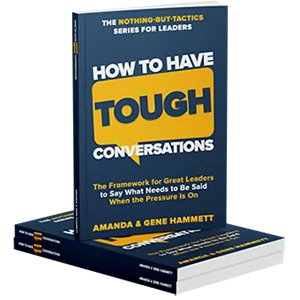
[18:33] And that is where a lot of people get stuck because they’re not willing to do the really tough work of taking the feedback, looking at themselves, sometimes letting go of tough and tough of employees, having tough conversations. Which is why I love your book so much, you know, getting feedback from your investors or boards, right? And also really doing the inner work yourself, get coaching to allow you to look at yourself and see where you’ve become your own barrier to growth, right? We all have these limiting beliefs. We all have these limitations on us until we put some light on them, right? And and can see them and can face them. So we talked about the stages of growth, but building the right team. Yeah. You know, early in the stage of your business, maybe it’s just you, maybe it’s you and a co-founder, maybe it’s you and a handful of people that are doers with you, but then you have to start adding people to the team and it takes some new skills for a lot of these founders that they didn’t learn in business school or they didn’t learn in corporate or they didn’t learn true leadership. And I’m one of those people. I had to hire a coach, Because I was a good doer, but I wasn’t a good manager or leader. And I had like 15 employees and things were not working the way I wanted to. And I wasn’t making as much money as I could have been making.
[20:03]So how do you help your organizations build the right team? What are the core pillars of that?
Self-Assessment for Leaders
[20:11] Yeah. So for me, it starts with one thing we do across all of our companies, and I highly encourage people to do, is self-assessments. It could be as simple as a Myers-Briggs or a DISC or an Enneagram. I like all of them. In fact, we’ve created and are going to be rolling out soon an AI tool that supports people doing that. It can be with a coach.
[20:37] There’s beginning that process of self-awareness. That’s where I find most people get stuck. They talk about, well, I need this head of sales. I’m worried about this. I’m not sure about that. It starts with the leader themselves. And the power of that is because when you really know yourself, and in addition to that work of, you know, sort of just the typical personality types, I like to put people through an exercise called zone of genius. So you’re looking for your zone of genius versus excellence, competence, and incompetence. And I do, in my recent book, I guide people through that very specifically. Because what it does is it allows one to see, wow, you know what? What gives me energy? What am I great at? And what do I get good feedback from the world? Well, you know, I’ll say personally, I love strategy. I love big picture. I love new business models. I hate getting in the weeds. It’s just not like, it’s not my thing. And so knowing that, I know I need a really strong finance team, really strong.
[21:47] And so I encourage people to get feedback, look at themselves, ask some questions, because you don’t need to get every function perfectly. It’s impossible to do every moment in time, right? What’s that first hire? What’s the area you dislike the most as a founder? What’s the area you’re weakest in? What’s the area that’s an energy down? Like you can do it, but it’s a drag. And look, I’ve met founders that are terrible salespeople. They don’t like selling. And great, they hire amazing salespeople. I’ve met some that are terrible at finance. They’re not terrible, but then they focus on the selling. They focus on the outer and they build that. It might be true with ups. You get that one and getting that one hire right, that one key next hire. Every time you hire, you are building the culture of your organization. To hire for skills, but hire for cultural fit.
[22:48] Not that they’re identical to you, but that they fit to the type of organization you’re trying to build. Are you passionate about, is it about passion or is it about numbers? Is it about ROI or is it about excitement and brand, right? Those sort of decisions help you get one hire right. The other thing I’d add is reference calls, reference calls, reference calls. There’s a great book called Who. It’s the best interview guide I’ve seen on how to interview and also how to do reference calls. I found so few people do this. On a recent CEO hire, I personally did 13 reference calls. Wow.
[23:31] Makes sense though, because, and no one teaches people how to hire people. And then they wonder, and most of these hired guns that come in, I see, I see the patterns. They don’t necessarily work out. Yeah, for sure. And you got no one to blame it yourself because you didn’t know how to hire. And maybe you even hired a recruitment agency, but they don’t, they just want to put candidates in front of you that are decent fit. Your job is to sort through and who do you really mesh with? Who are you willing to be, you know, your ride and die? Yeah.
[24:06] Mark, we’re going through so many of these things. I’m so interested in all of this. I want to zero in on one thing because I’d love for you. You said you got a book or something on the zone of genius. Like, how do you help people come up with what is that zone of genius or excellence or competency or incompetence specifically? Yeah, yeah, yeah. It’s fun. So, you know, one of the things as I was doing my own work on this, I, you know, went through a process that I came up with. What I call it is peak moments of freedom. So the exercise is to look back over your life, really from the time you were a kid. What were the time in situations where you just felt energized, time stopped, right? You could do this thing forever.
[24:57]You got good results, whatever that means.
[25:02] And people on the outside said, well, that’s really good. That’s really interesting. So you have all of that builds to a level of energy that then begets itself. Energy begets energy momentum is this is a momentum game right and i’ll give you an example where this may sound kind of hokey but how it translates translated for me and i did this not i do this regularly i look back and there’s one time when i was redoing um a outer garden in our house you know we had this beautiful house and nice yard i decided to do what we wound up calling this rancho.
Finding Your Zone of Genius
[25:39] It’s like a sitting area down by the beach and it’s got a garden outside. I went to town on this. I obsessed on the drawings and the plan and the plant team, hiring people, managing it. I was working nights, weekends while I have a day job, right? And so I look at that and could say, well, what does that have to do with business? What does that have to do with running a fund, right? But the exercise is then to go through that and say, okay, what did I really love about that? I love the autonomy. I love creativity. And I love physically seeing something realized within a period of time, the physical manifestation of my sort of effort. And so I can see directly how those apply for me at work. I love to have a creative project. I need a creative project. I love it when people say it can’t be done.
[26:32] But it’s got to have a reasonable time period when I can start to see results. I can’t sit back eight years and figure out something crazy, right? So I apply those things when I’m thinking about new projects, I apply those. But it also means when I hire people, I know that they backfill for follow through, for detail, for project planning, for maintenance, because those aren’t my zones of genius. Beautiful conversation here, Mark. I really appreciate you sharing your wisdom, being here as a guest, and hopefully you’ll.
[27:10] Grace this back with your presence so that we can talk about some of the books that you have and some of the tools that you use. I think our audience would be very fascinated around that.
Wrapping Up Insights from Mark
[27:20] I’d be honored, Gene. I appreciate that. Wow, what a great interview with Mark. I just really enjoy his perspective on things. There is an alignment with what I say and what I’ve been talking about for years, which that’s easy for me to agree with. But I will tell you, I love his background and the way he approaches things. It’s not from a strategic level. It’s from the inner work. And that’s what I’ve seen as getting in the way of a lot of leaders that want to grow their company. So today’s episode was really about building the right team for the right growth stage that your business is in. And so if you have any questions, want any help whatsoever, if you want to sign up for our training, absolutely free. Go to training.correlation.com. And if you just want to chat with me, you can do that. Just send me an email, gene at genehammett.com. When you think of growth and you think of leadership, think of growth, think, think. As always, leave the courage. We’ll see you next time.
Key Takeaways
- The stories leaders tell themselves matter. Internal narratives can either unlock growth or quietly limit what a leader believes is possible.
- Self-reflection is a leadership requirement, not a luxury. Growth as a leader starts with the willingness to examine your own mindset, behaviors, and blind spots.
- Scaling a company requires evolving your leadership style. What works at one stage of growth often breaks at the next leaders must adapt as the organization expands.
- Strong teams are built through complementarity, not similarity. The best leadership teams balance each other out with different strengths aligned to the company’s needs at each stage.
- Operational changes are part of leadership maturity. Growth isn’t just vision it requires adjusting systems, structures, and execution models as complexity increases.
- Feedback is a growth accelerator. Leaders who actively seek and embrace feedback especially uncomfortable feedback tend to improve faster and build stronger organizations.
- Purpose and performance can work together. Mark emphasizes that building impactful companies doesn’t mean sacrificing results in fact, clarity of purpose often drives better performance.
This episode is a must-listen for CEOs and executives looking to lead innovation with purpose, scale responsibly with AI, and build cultures where people feel empowered to think boldly and grow.
About Mark Rampolla
Mark Rampolla is a visionary entrepreneur, investor, author, and coach known for helping mission-driven leaders build businesses that matter. As co-founder and managing partner of Ground Force Capital, he works with founders to scale purpose-driven companies while creating meaningful impact.
He is best known for founding Zico Coconut Water, helping pioneer the coconut water category, and later selling the company to The Coca-Cola Company. Today, his work centers on helping entrepreneurs redefine success, aligning business growth with personal freedom, purpose, and long-term impact.
How to Connect with Mark Rampolla:
LinkedIn: Mark Rampolla (LinkedIn)
Company Website: GroundForce Capital
Get In Touch with Mark: Contact
Resources & Next Steps
Ready to take your leadership energy to the next level?
Explore free training and resources at training.coreelevation.com to help you identify energy leaks, strengthen your leadership presence, and elevate your team’s performance.
🌐 Explore More: training.coreelevation.com
🎧 Listen to the Full Episode: Growth Think Tank Podcast