In this episode, I sit down with Mark Hughes, co-founder and CEO of Solid Road, for a real conversation about how AI is reshaping customer experience and what that means for leaders today. We explore how tools like the Claude coworking system are changing team communication and improving transparency, and why Mark sees radical transparency as a key to building trust and ownership across an organization. We also get into how leadership evolves as companies scale, why hiring specialists matters, how your role shifts as a leader, and what it takes to step into a more strategic mindset. Mark shares his own journey through that transition, along with the lessons he’s learned along the way. We wrap up by looking at how embracing AI isn’t just about efficiency, but about fostering a culture of continuous learning, adaptability, and growth.
Episode Highlights & Time Stamps
6:34 The Power of AI in Customer Experience
8:41 Managing Team Burnout
10:02 Core Leadership Principles
11:34 The Importance of Ownership
13:52 Defining Radical Transparency
17:17 Future of AI-Driven Leadership
23:34 Evolving Leadership Practices
Transcript
Mark Hughes
And we have that Claude co-work set up for every single person. And also, kind of back to the transparency piece, it kind of promotes that again, because it means that every Slack channel has to be a public Slack channel. It means that everyone has to give access to their sales calls. For us all to be able to pull from Claude, everything has to have full permissions. So that’s only one thing that I’ve realized that was not something I’d factored in from the beginning. But it is again people are being very open with their work and and not just me like anyone in the company can say like how did the sales call go with rippling early earlier today or uh how was the customer call with crypto.com and so i think it’s like speed of execution is definitely um completely changed now with uh with ai and how quickly you can get this information out of the company uh it’s almost become claude has actually become like this operating system for our business that we’re able to pull information very quickly and make decisions quicker based off that.
Gene Hammett
[0:58]Welcome to Grow Think Tank. This is the only place where you will get insight from the founders and the CEOs of the fastest-growing privately held companies. I am the host. My name is Gene Hammett. I help leaders and their teams navigate the defining moments of their growth. Are you ready to grow? Today, we’re going to talk about the future of AI-driven leadership, and when you think about AI and leadership. You probably have some preconceived notions of what it is, what it can do for you, and what it isn’t. And I will tell you, it’s changing fast. You probably already know this. But hopefully you’ll look at this with open eyes around things that you can do and can’t do with AI. We get to more of the things you can do. But I will kind of just mention some of the things that you can’t do. And from my perspective, it is, you know, your AI is not reading body language with you yet. Your AI is not reading language patterns and how you say things, and what you say, and the word choice. And it also doesn’t know how to truly hold someone accountable. I don’t think AI accountability is at the place that it will be in the future. But if you make a promise to your AI agent to go to the gym, it’s very easy not to go to the gym.
[2:18]I’m not a health coach and whatnot, but in leadership terms, you could make a commitment to have the tough conversation, and not doing it is a choice, but it’s not going to hold you accountable the same way it would be if you promised your coach and you were really committed to growth in that area. And then you guys could discuss the feedback and discuss how it went and fine-tune things over time, and that accountability aspect inside of AI. But… Today, we’re going to unpack how AI-driven leadership is changing. Our special guest today is the co-founder of Solid Road. They create AI usage to improve customer experience. They have scorecards, all kinds of things that will help you. I think you’ll find it fascinating.
[3:03]But we have with us Mark Hughes. And Mark and I talk about the future of AI-driven leadership. And we talk about how they’re using AI inside his own leadership in just the last few weeks that have been changing. It is helping him stay in tune with what’s going on in the company, help him fine tune the next step with clients or people or whatever it may be in all aspects of the business. So that is part of what you will hear today. He will also talk about the importance of radical transparency. We will define what that is and give you some examples. I think you will find very actionable and tactical today. My name is Gene Hammett. I am a founder coach. I’ve been doing this for about 16 years and I really love helping founders who are in the day-to-day of their business learn how to get out of the day-to-day. Let me say that differently. Taking founder-dependent businesses and moving them to founder-led and eventually founder freedom where it’s team-driven.
[4:08]Not everything is relying on the CEO to pull things forward or the founders. So that being said, if you’re curious about the workshop that we’ve got coming up next, it’s absolutely free. All you have to do is go into training.coreelevation.com. And if you do that, you will find a little bit more information about what that is. And then you will be able to sign up for free. And so you will get the insights on how we guide our clients through this process. Look forward to sharing that with you. Just go to training.coreelevation.com. It’s absolutely free for you. Now, here’s the interview with Mark. Hey, Mark, how are you?
Mark Hughes
[4:46]Excellent. How are you?
Gene Hammett
[4:47]I am fantastic. I’m going to have a great interview here on the podcast, Growth Think Tank. And before we get started, I’d love for you to tell them about your company, Solid Road.
Mark Hughes
[4:58]Super. So my name is Mark. Obviously, I am the co-founder and CEO here at Solid Road, and we are building the observability platform for customer experience teams. So what our platform does, it uses AI agents to review 100 percent of your customer conversations and then improve them in multiple different ways. So to kind of, I think the analogy I always give is when you call a customer support team or a call center and it says this conversation will be recorded for training and quality purposes. That used to be very manual and handled by humans with classroom-based training and humans reviewing conversations and auditing them with scorecards. We use AI to achieve that. So our AI agents will review and do quality assurance on all your interactions. In a customer support org, and then we will find ways to improve them. So we will train your human agents using simulation training for them to practice with AI customers and close skill gaps. And then for your AI agents, if you do have AI agents live, we can give process updates or prompt updates to lead to higher resolution rates. So the old way of QA and training for customer support is gone, and the new way is in with SolidRoad using AI to achieve that.
Gene Hammett
[6:16]Mark, this is very fascinating, and I love the AI coming on. I’m a little bit weary of it, but the power of things like this, really good example of taking these recorded calls that we used to listen to
The Power of AI in Customer Experience
Gene Hammett
[6:31]them manually, whether it be sales or customer service, and then we give feedback. Give me a concept, like one of the killer features inside the app, so that we can really cue into this. How are they helping the internal customer employees be better?
Mark Hughes
[6:49]Yeah, it’s a great question. I think really the main thing is like our scorecard and how we built that is really the flywheel for everything else in the product. So we built really context aware scorecards that you can use natural language to share exactly how you want that conversation to be run. So we work with health care providers or financial services companies that need to remain compliant and ensure that their support agents aren’t saying things that could be to get them in trouble by getting fines, for example, by giving financial advice. So being able to get that much context into a scorecard and then score it automatically. So we have process adherence, like I mentioned, where we can automatically look up your processes and ensure that you’re scoring against them. We have soft skills, so to ensure that your agents are being empathetic or doing active listening. We have automatic failures of different sections or passes of different sections. So really, it all comes down to how kind of rich the scorecards are built, and then everything’s built on top of that. So we use those scorecards in live interactions.
[7:50]So for calls with customers or live chats or emails, and we score those interactions and give coaching and feedback. And then also in our conversation simulator, the same scoring rubric is used to score those interactions where an agent might be in onboarding or training, and they’re looking for ways to improve. And then we can kind of close that feedback loop. So it’s I’m getting scored on my live interactions, finding the skill gaps that I’ve been sent simulation training, scored again, and I can see my performance improvement over time.
Gene Hammett
[8:21]Well, that’s a really good understanding of what you guys are doing with your technology and how it really applies in a real world. So thank you for sharing that with us, Mark. When we do these interviews, typically we dive into not the product or service
Managing Team Burnout
Gene Hammett
[8:37]or the technology. It’s how you have led this. And one of the things I think that you’re probably doing for others, but you’re probably also doing it for your team, is scaling your team without burning them out. So when you think about that kind of promise that you are doing within your own team, were you seeing much burnout with your team members as they were pushing hard?
Mark Hughes
[9:04]Thus far, obviously, we’re an early stage startup. And so it does involve kind of working very hard. I think what we’ve seen is we’ve kind of moved from as the company has grown from like a team of elite individuals into building an elite team. So we haven’t seen burnout as of yet thankfully and how we manage that is um kind of we are very explicit on we are in person nine to six there’s times where you uh have to work later than that there could be deadlines we need to hit for customers etc but there’s no we’re not playing startup here it’s not all for for show where we’re expecting people to be kind of just working to midnight for the sake of doing it there are obviously times where people have to work harder And yeah, we try to manage that as much as we can. But really what we’ve noticed is kind of from a small team, people are working really hard. And now it’s how do we actually scale that to kind of turn these elite individuals into an elite team.
Core Leadership Principles
Gene Hammett
[10:03]Fantastic. Let’s let’s dive into the heart of this. Like, what are the core principles of your own leadership that have made your company create such traction right now?
Mark Hughes
[10:14]I think myself, my co-founder, we are very much an equal partnership. We always say that from the get-go. And whereas I come in, I’m very like the six inches in front of our face. And my co-founder, Patrick, our CTO, he is very like visionary, the future. We’re building solid road tower. So we kind of have the tactical meets the strategy piece. And we deliver that very well. I think we don’t expect anyone to do anything we don’t do. So we kind of lead from the front. And that’s something I think that we’re very good at. But really, it’s just down to radical transparency. We are very open. We share kind of our revenue, our cash burn, money in the bank. And these aren’t things that are common in Silicon Valley or San Francisco, but we treat everyone like adults and we expect them to behave accordingly. But I think if I had to boil it down, it’s we don’t expect others to do things we don’t do ourselves. We lead from the front, like lead by doing, and then treating everyone as mature adults and being very transparent on how we’re running the business.
Gene Hammett
[11:19]One of the things you probably don’t know about me because we have such a history of content and research into the growth companies is we started hearing the fact that CEOs wanted their employees to take ownership.
The Importance of Ownership
Gene Hammett
[11:34]And we heard this word ownership a lot. And so I am curious, so I dove into it. What are the core elements of ownership? One of the six is transparency. You’re probably not surprised by that because those that are treated like adults, your words, and I’ve said those same words, they feel a higher sense of ownership. But when you block them off from sharing that data, sharing those conversations, they don’t feel that level of ownership. They feel like a cog in a wheel. Where did you get that from? Is it something you did in your previous startup or something you had just thought you wanted to include in this world?
Mark Hughes
[12:14]Yeah, I think it’s a culmination of a few things. Both myself and my co-founder are both second time founders. So this time around, we kind of, we were very clear, we were a good match where I bring the kind of sales go to market acumen and Patrick is like one of the best engineers I’ve ever met. And our previous startups didn’t work out for different reasons. Whereas for me, I didn’t have a technical co-founder the last time. So outsourcing a lot of development. Patrick had three engineers and no one to go to market. So we are a great match in that regard. And I think it’s a culmination of doing things wrong, maybe the first time around, plus how we worked in companies ourselves before we did our startups. We kind of traded stories of how we didn’t have that level of ownership in other companies we worked at. And we wanted to be very explicit to give that to our employees. And it’s been great because it’s really, as the company’s grown, it’s kind of embedded in the culture where, yeah, we do share more than most and give a lot of trust to our employees. And that has worked in our favor because people do take ownership of their role, projects, whatever it might be, and they kind of pick up the ball and run with it is kind of an analogy. We like a lot of sports analogies. Both myself and Patrick, he played rugby, and I played soccer at a decent level. So we do like sports analogies here as well.
Gene Hammett
[13:40]Well, me too. And I’m not necessarily, didn’t play it at any elite level, but I just like sports. And it helps put things in context sometimes. I want to go single in on the word you use, radical transparency.
Defining Radical Transparency
Gene Hammett
[13:53]There’s a difference between transparency and something that would be called radical. I wrote it for Inc. Magazine for many years, and I looked at Radical Transparency as one of the articles I wrote that did the best across 150 articles. Give us your best definition of Radical Transparency.
Mark Hughes
[14:15]It’s a great question. I think
[14:23]How I describe it is giving full information up front and so there is no guesswork.
[14:30]And yeah being very explicit in the ask, I think we benefit from the fact that we’re all in person so it’s as easy of kind of grabbing someone in a room saying this is what I expect of you, This is kind of what you’re being measured against. And then the clear check-ins to make sure that we’re aligned on that. And I think maybe it’s back to like my sales background, but everyone has almost like a sales-oriented KPI. So the North Star for the company is growing revenue and everyone can influence that. And like our weekly goals is always a revenue goal. But then the various different KPIs that feed into that, be it like an engineer being able to, how many customer calls they take, if it’s our customer success team, net revenue retention, if it’s our support team, ensuring that the SLAs are all being hit. So it’s like we’re having that kind of main goal that everyone is aware of and then how your goals influence that main goal. We have daily syncs every day to see how we are progressing towards that goal. And everyone has clear ownership. So it’s actually in front of the whole company of like you said, you’re going to hit this goal. Your name’s beside it in this notion doc. Everyone else can see it. How are you trending towards it? And it’s like green, red, amber, green, amber, red. And there’s no hiding from it.
Gene Hammett
[15:54]Yeah, those are core elements that a lot of people are missing. So hopefully everyone’s taking notes on the tactical elements of transparency. I’ll highlight one of the things you just said because I think it’s really interesting. A lot of people will have KPIs that are hidden.
[16:09]But I find those organizations that have that radical transparency don’t hide them. They show them and maybe don’t make progress on each one of them every week. But over time, you want to make sure that you’re making progress. Otherwise, you’ll see everyone else on the team. We did this with one client many, many years ago. And in a six salesperson team, wasn’t a big team. One person was not meeting the standard and everyone else was moving forward. And she’s like, she’s just self-assessed. I think it’s not working out for me here. I think I’m going to move on. And it was time. We didn’t even have to have the tough conversation because that was in place. It was open to see across everyone. And that’s part of that radical transparency. So thanks for walking us down that, Mark. It’s exactly what we’re looking for, these real usable elements that someone could say, oh, we could do a better job with that. Let’s go back to this. A big part, again, it’s part of the technology and the promise you’re making to your market.
Future of AI-Driven Leadership
Gene Hammett
[17:13]But you’re looking at the future of AI-driven leadership. So I’d love for you, because you’re uniquely positioned to talk about what that looks like in the future. Can I get your view of the future of AI-driven leadership?
Mark Hughes
[17:30]Yeah, I think really it’s so early in how AI is playing out. We are an AI first company and we are definitely AI maxing. So my job and how I do it now is completely different to how I did it a year ago. Now I use Cloud Cowork. I have every single tool hooked up to it from Granola meeting notes, Gong sales calls, HubSpot, Slack, Notion, Linear, you name it. Every single tool that we use is kind of pulling into this cloud coworker. And I’m able to query it on a daily basis to see, like, how our sales team is tracking? Are there any open bugs with customers that I need to be aware of? And we have that cloud coworker set up for every single person. And also, kind of back to the transparency piece, it kind of promotes that again, because it means that every Slack channel has to be a public Slack channel. It means that everyone has to give access to their sales calls. For us all to be able to pull from the cloud, everything has to have full permissions. And so that’s only one thing that’s kind of I’ve realized that was like not something I factored in from the beginning. But it is, again, people are being very open with their work, and not just me, like anyone in the company can say, like, ” How did the sales call go with Rippling earlier today? Or how was the customer call with Crypto.com?
Mark Hughes
[18:49]So I think it’s like speed of execution is definitely completely changed now with AI and how quickly you can get this information out of the company, it’s almost become, Cloud has actually become this operating system for our business that we’re able to pull information very quickly and make decisions quicker based off that
Gene Hammett
[19:07]Well, let’s dive into the details of that. I mean, I, you know, I think Claude Cowork is one of the biggest, newest aspects in the era of AI from my perspective. And I kind of keep my finger on the pulse of this, but over the last month or so, and I know you’ve probably been using it much longer.
Mark Hughes
[19:25]No, I think it was genuinely since the last model, the 7th or 8th of February. Don’t quote me on that, but it was as soon as that landed, it really was that step change that was like, oh, wow, this is so much better now. And this is how we are going to change how we work.
Gene Hammett
[19:40]So given that, let’s fast forward to how you’re using it. If you’re scanning across dashboards or scorecards or whatever it is, the way it organizes HubSpot sales, customer service, anything you put into your systems, what is the real insight that you feel like has been just like a game-changer for you and your team?
Mark Hughes
[20:02]I think it just stops the game of telephone where I have to ask one person to ask another person to get the information. It just really speeds that up, where we can just pull that information directly. And so it’s just been down to speed and how quickly I can find things out and not having to hop on maybe a quick call or if I have to kind of pull someone off their desk we’ve got two offices so we’ve got our office in San Francisco and our office in Dublin Ireland you probably gather from my Irish accent I’ve moved out here with the company to San Francisco only since last August but we do have an in-person culture but two offices different time zones so really I have noticed it a lot because I no longer have to maybe hop on a quick Zoom call with someone in Dublin to find out some information. I can pull it directly. So it’s just been an absolute game-changer in regards to speed.
Gene Hammett
[20:52]Fantastic. What else would you say is a part of the future of AI-driven leadership?
Mark Hughes
[21:03]Yeah, it’s a good question. I think I know you mentioned before we even went on that you’re kind of uploading your IP to an AI agent to kind of allow people to chat with us. I think there’s gonna be more of that where The kind of coaching I’m doing now might be kind of coming from an AI that I’m actually being able to upskill myself on the job using AI with different things as I progress to the different stages of the company, going from like a seed stage or a pre-seed CEO to seed stage, you know, Series A CEO. I’m constantly looking to upskill myself. So I think it’s from like a leadership standpoint by leaning into AI and kind of being able to upskill myself on things I’ve never done before. Because there are lots of different challenges that come with a company that’s growing and at different stages. So I’m always looking to ensure that I’m promoting myself, that I’m actually, I think everyone kind of, once you get to the next stage, everyone’s kind of fighting for their job again, myself included as the CEO. So I think that’s where I found I’m using AI a lot as well. Just being able to spar with, I suppose, is a good word, as almost like an AI coach for the various different things I’m doing.
Gene Hammett
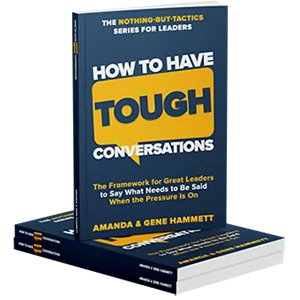
[22:22]Well, I want to make sure the audience is well served. I don’t want this to be like a commercial, but you kind of mentioned something we talked about before we hit the recording on my book, How to Have Tough Conversations. We created a private GPT with all the IP and role play inside of ChatGPT this time. We could port that to another LLM, but it is a good example of, I think, the future of how we’re learning and engaging with content. And it will give you insights on what you can do better and coach you right there using the tool. And if anybody wants it, here’s, I guess, the commercial plug. Go to howtohavetoughconversations.com, and you can download it for free. So you may have to buy the book.
Mark Hughes
[23:04]We didn’t even have to plan that.
Gene Hammett
[23:07]Mark, let’s step back a little bit. Like, you know, this is not your first rodeo. You’ve had an exit before. You really, I can tell your excitement around this new play here with Solid Road. Um, what in your leadership has shifted over the last few years that you can look back at it and go, oh, I can’t believe I used to believe that about leadership. Is there anything that comes to mind that might help our audience?
Evolving Leadership Practices
Mark Hughes
[23:35]I think the big thing i learned was of this is something that i’ve learned of late of just like moving from generalists to experts or specialists per se and that the team that got you from kind of zero to a millionaire roar is knocking the team that gets you from one to ten million and that you do need to hire those specialists i think one thing i held on to for too long was i come from a sales background i need to be doing sales for as long as possible. And really, that actually could have slowed us down when I look back, that I should have been able to offload that quicker. And even at the stage right now, we’re growing really fast, but only a few weeks ago, we had only 13 full-time employees. And I used to hold that as a badge of honor, like, look how much we’ve achieved with such a small team. And we’re using AI to the fullest, and we really are an AI-first company. But now I’m like, we didn’t hire fast enough, and I should have been able to offload the sales piece quicker. And I’m really happy I’ve been able to do that now and now when I see the sales leadership that we brought in I realize like okay like this this person is objectively better at me for this stage and they have done they’re a two-time VP of sales and they’ve done this before and I’m learning from them and I think it’s a great like it’s kind of a weight off my shoulders where I have like full trust in them to execute and but yeah I think that’s one thing I learned that maybe I held on to that longer than I should have
Gene Hammett
[24:58]Well, that’s a good place for us to kind of wrap up today, Mark. And I’ll just highlight one of the things you just said there. The team that got you here may not be the team that gets you to the next level. In doing close to 1,300 interviews for this podcast with founders just like yourself, it is one of the patterns that we see over and over and over, whether it be through the podcast guests, through our clients, is the up-leveling of teams. Sometimes it’s slowing down to speed up. So we have to rebuild some systems and processes, or maybe it’s leadership development. And that’s kind of a really good way for you to frame it and realize, yeah, you probably did slow things down a little bit. It’s what you’re good at. And sometimes that can be bad for the company overall. But also, it’s good to know it. And then you learn from it. Right? So thanks for sharing that with us, Mark, being radically transparent as we began the conversation about some of the things that you’ve learned. I’m glad you played along with that because you could have said, no, I figured it all out.
Mark Hughes
[26:02]Definitely not. Every day is a school day.
Gene Hammett
[26:05]Yes. Mark, thank you for being here on the podcast. It’s been a pleasure to get to know you and talk about the future of AI-driven leadership. And that really is kind of an exciting era that we’re all moving into, whether you like it or not. So thanks for being on the podcast.
Mark Hughes
[26:22]Thank you very much.
Gene Hammett
Wow, what a powerful interview to have with Mark about the future of AI-driven leadership. When you think about leadership and AI, you may have some hesitancies, but I think it will help you lead better. You just have to know what it can do and can’t do. And it’s changing very fast right now. So hopefully you enjoyed today’s conversation with Mark. And I did enjoy it pretty much so. If there’s any way I can help you, please let me know. Send me an email, gene at genehammett.com. When you think of leadership, and you think of growth, think of a growth think tank. As always, live with courage. We’ll see you next time.
Key Takeaways
- AI is becoming the new operating system for leadership, giving leaders real-time visibility across teams, customers, and business performance.
- Tools like AI coworking systems are dramatically increasing speed of execution by removing information bottlenecks inside organizations.
- Radical transparency builds stronger ownership, accountability, and performance by making goals, metrics, and communication fully visible.
- Leveraging AI requires a culture of openness shared access to data, conversations, and insights becomes essential for it to work effectively.
- Leadership is shifting from doing the work to orchestrating it, empowering specialists to own key functions as companies scale.
- Hiring experienced specialists earlier can accelerate growth and prevent leaders from becoming bottlenecks in their own company.
- AI can also serve as a leadership coach, helping founders and executives think through challenges and continuously upskill.
- While AI enhances decision-making, human leadership is still essential for accountability, empathy, and culture-building.
- High-performing cultures are intentionally built through trust, transparency, and leading by example.
- The future of leadership belongs to those who stay adaptable, embrace AI, and continuously evolve how they lead.
This episode is a must-listen for CEOs and executives looking to lead innovation with purpose, scale responsibly with AI, and build cultures where people feel empowered to think boldly and grow.
About Mark Hughes
Mark Hughes, Solid Road, AI, customer experience, leadership dynamics, Claude coworking, communication, operational transparency, radical transparency, hiring specialists
Mark Hughes is the co-founder and CEO of Solidroad, a company focused on using AI to improve how customer-facing teams train, perform, and deliver support. His work centers on building AI agents that help companies coach their teams, analyze conversations, and raise the overall quality of customer experience at scale.
Before launching Solidroad, Mark founded Gradguide, a mentorship and coaching platform for recent graduates, where he raised funding, built a team, and successfully exited the company. He also brings deep experience from roles in sales, support, and customer success leadership, previously leading EMEA teams at Chargify (now Maxio) and working as an early sales hire at Intercom.
Through Solidroad, Mark is helping organizations rethink how teams learn and improve, combining AI-driven insights with real-world training to accelerate onboarding, boost performance, and create more consistent customer experiences.
How to Connect with Mark Hughes:
LinkedIn: Mark Hughes (LinkedIn)
Company Website: Solidroad – to learn more about his work and platform
Get In Touch with Mark: Contact
Resources & Next Steps
Ready to take your leadership energy to the next level?
Explore free training and resources at training.coreelevation.com to help you identify energy leaks, strengthen your leadership presence, and elevate your team’s performance.
🌐 Explore More: training.coreelevation.com
🎧 Listen to the Full Episode: Growth Think Tank Podcast